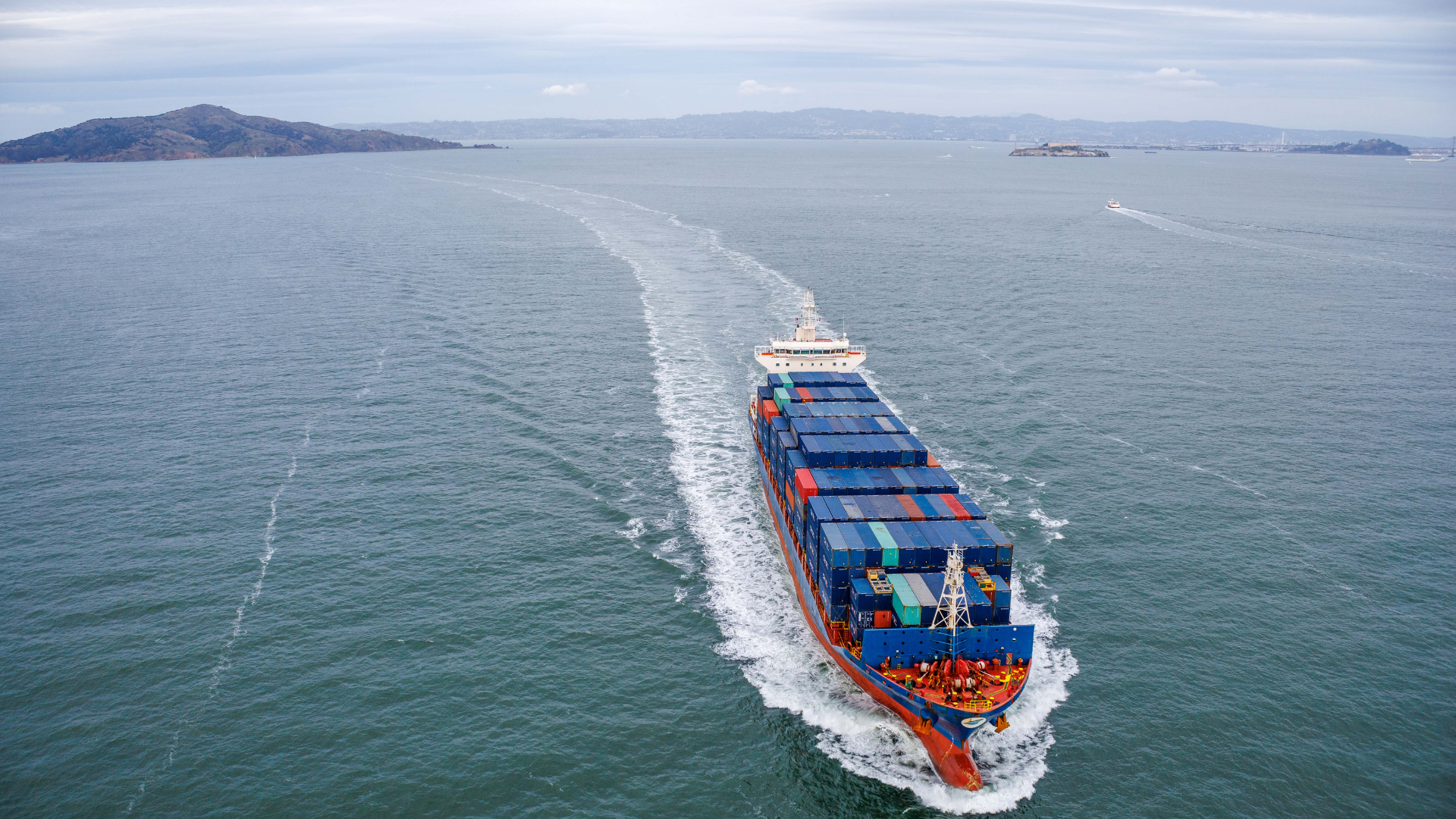
Safe Depressurisation in Tanker Operations: Managing Pressure, Minimising Risk
This article highlights the importance of safe depressurisation in tanker operations, focusing on vapour return systems and the risks associated with improper pressure release during disconnection. It outlines key safety considerations and regulatory requirements, including IMO and MARPOL compliance.

Expert insights
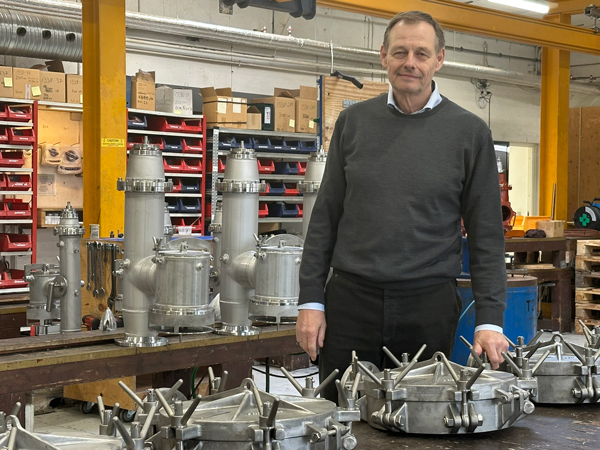
The insights are provided by Jens Reimer, General Manager Sales and Head of Regulatory Affairs at Pres-Vac Engineering. With over 22 years of experience, he is a recognised expert in pressure/vacuum valves and international maritime regulations
As tanker operations become increasingly complex and regulated, safety during loading and disconnection of the vapour return system remains a critical focus area. One often overlooked, but essential step is the safe depressurisation of vapour return systems.
According to Jens Reimer, this is where risks can arise if not handled correctly.
“During closed loading operations, vessels operate with vapour return systems connected to shore facilities. This is essential for reducing emissions and complying with regulations such as USCG-VECS and MARPOL. However, it also means that pressure builds up within the system,” he explains.
In practice, this pressure can reach significant levels—typically between 11 and 48 kPa—depending on the vessel’s pressure relief valve settings. Once loading is completed, this pressure must be released before disconnection can take place safely.
“If the system remains pressurised and is disconnected without proper depressurisation, it introduces a clear safety hazard for both crew and equipment,” Jens Reimer emphasises.
A critical safety function onboard
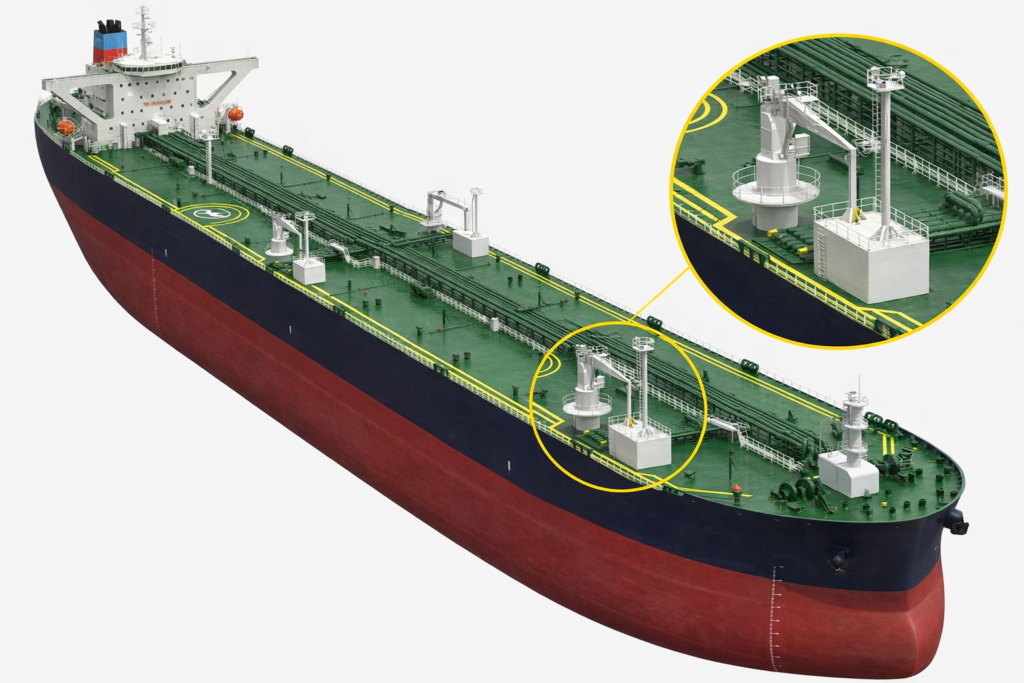
To address this challenge, Pres-Vac Engineering has developed the EFA-E Deflagration Flame Arrester—an end-of-line solution designed specifically for controlled depressurisation.“The purpose of the EFA-E is quite straightforward, but absolutely critical,” says Reimer. “It enables the crew to safely reduce the pressure in the vapour return system back to ambient conditions before disconnection.”
Installed on a branch line at the crossover manifold, the system remains isolated during loading. Only once operations are completed is the butterfly valve opened, allowing controlled pressure release through the Deflagration flame arrester. “This ensures that depressurisation is done in a controlled and safe manner—without exposing the crew or vessel to unnecessary risk.”
Combining depressurisation with flame protection
What differentiates the EFA-E from simpler venting solutions is its dual safety function. “It’s not only about releasing pressure,” Reimer explains. “The unit is also designed to prevent flame transmission. In the event of ignition, the system protects against deflagration and endurance burning.”
This is particularly important in modern tanker operations, where vessels increasingly handle fuels such as methanol and other volatile cargoes. The EFA-E is certified for endurance burning protection for IIA, IIB3 and IIB cargoes, alcohols and hydrocarbons and is designed in accordance with key standards including ATEX, EN ISO 16852, and IMO requirements. “At Pres-Vac, compliance is not something we add afterwards—it is built into the design from the beginning,” he adds.
Engineered for real marine conditions
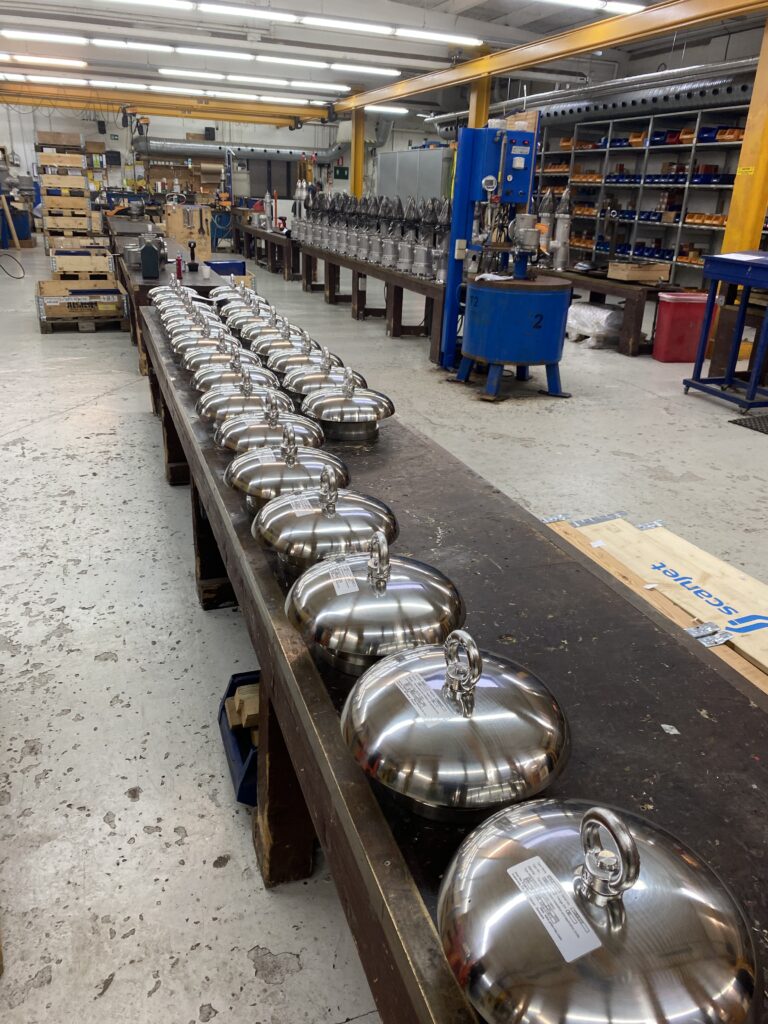
Beyond compliance, the design philosophy is centered on reliability in demanding environments. Manufactured entirely in AISI 316 stainless steel, the EFA-E is built to withstand corrosive marine conditions while maintaining long-term performance. The flame-arresting elements are precision-engineered and hand-assembled to ensure consistent operation under extreme scenarios.
“One of the key features is the automatic weather hood,” says Reimer. “In case of fire, it opens to prevent pressure build-up around the flame arrester element. It’s a simple but very effective safety mechanism.”
Supporting safe operations across applications
While primarily designed for vapour return systems during loading, the application scope extends further. “The same principle applies during ship-to-ship transfer operations,” Reimer notes. “Any situation where controlled depressurisation is required—this is where the EFA-E provides value.” In some segments, such as inland tanker operations in Europe, such solutions are not just recommended—they are mandatory.
A broader perspective on safety
For Jens Reimer, the EFA-E reflects a wider approach to safety in tanker operations.
“Safety is often about managing transitions—loading, unloading, connecting, disconnecting. These are the moments where systems are most vulnerable,” he explains.
“Our role is to ensure that these transitions are controlled, predictable, and compliant with regulations. The EFA-E is a good example of how a relatively simple device can play a critical role in overall system safety.”